[ Home ]
[ EN | DE ]
Time Recording: Weekly target time
Terminology and hints
• “Target time”: Target time is the worktime goal you want achieve, on a daily, weekly or monthly basis.
• “Delta”: Delta is the difference between actual work time total and target time.
Sample, with daily target time set to “08:00” (which is hours and minutes)
- if actual work time is 07:30 → Delta will show as '-00:30' (since you're half an hour below target time)
- if actual work time is 09:15 → Delta will show as '+01:15'
• Reporting: use “Worktime overview”, or report “E8 Overview”.
• Alarm settings can notify on daily or weekly time reached events.
• Note: these three “target time” features are configured and calculated completely independent of each other;
consolidation or merge of “Delta” values across these features is therefore not supported
(that is, things like “take over the daily delta and copy it into the monthly delta” are not possible).
Weekly target time | Sample
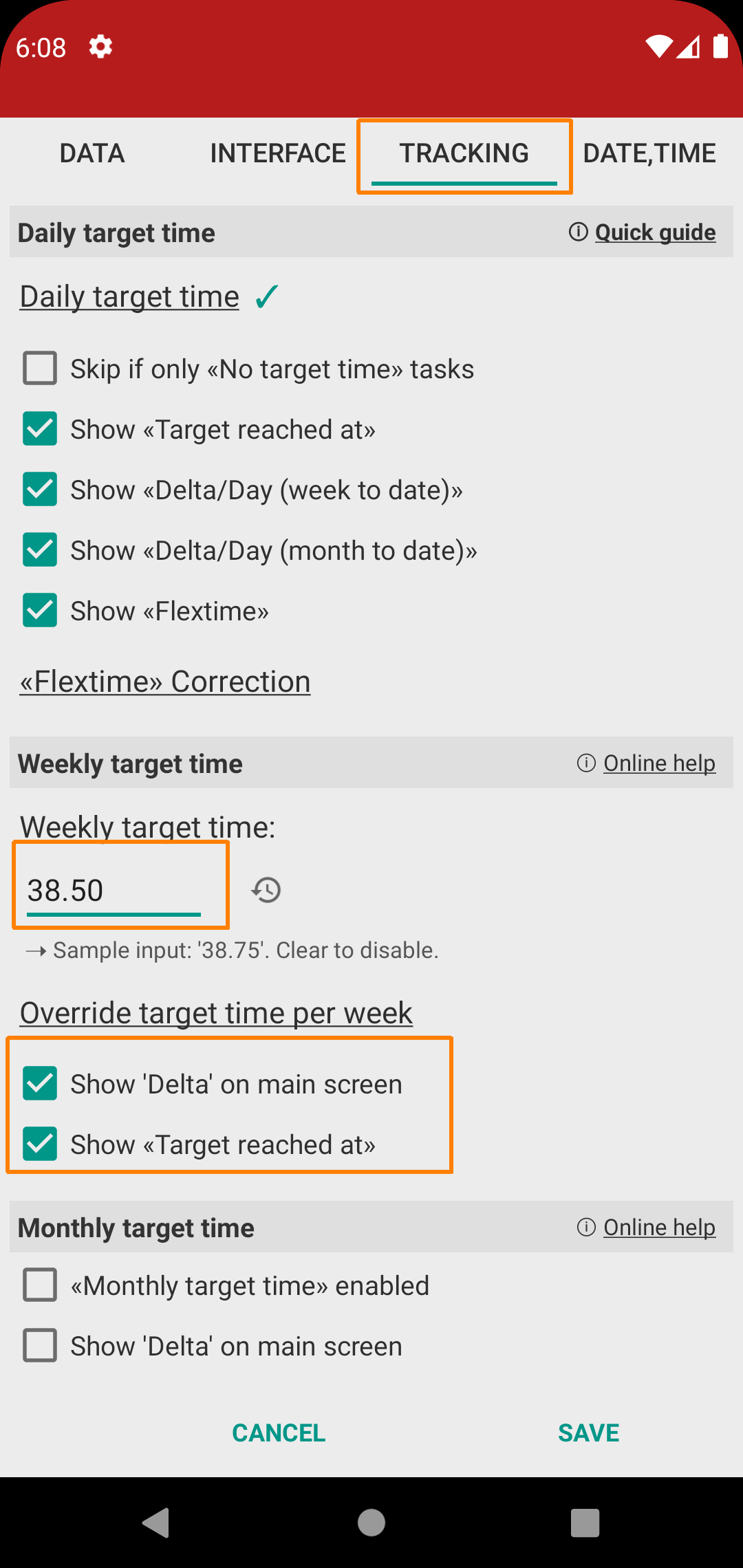
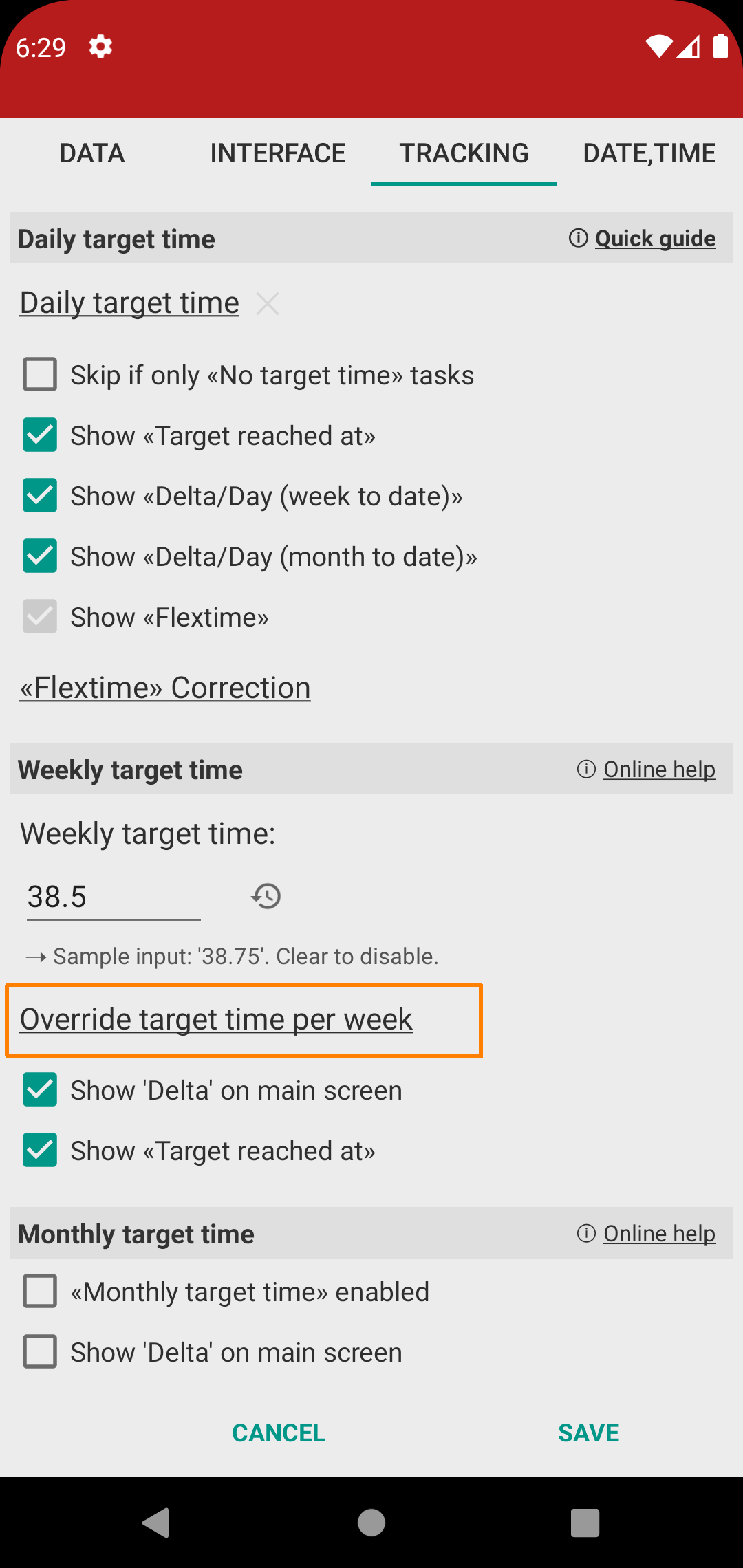
• Target hours is 38 hours 30 minutes.
• Note: data input is in decimal format, i.e. 0.50 = 30 minutes.
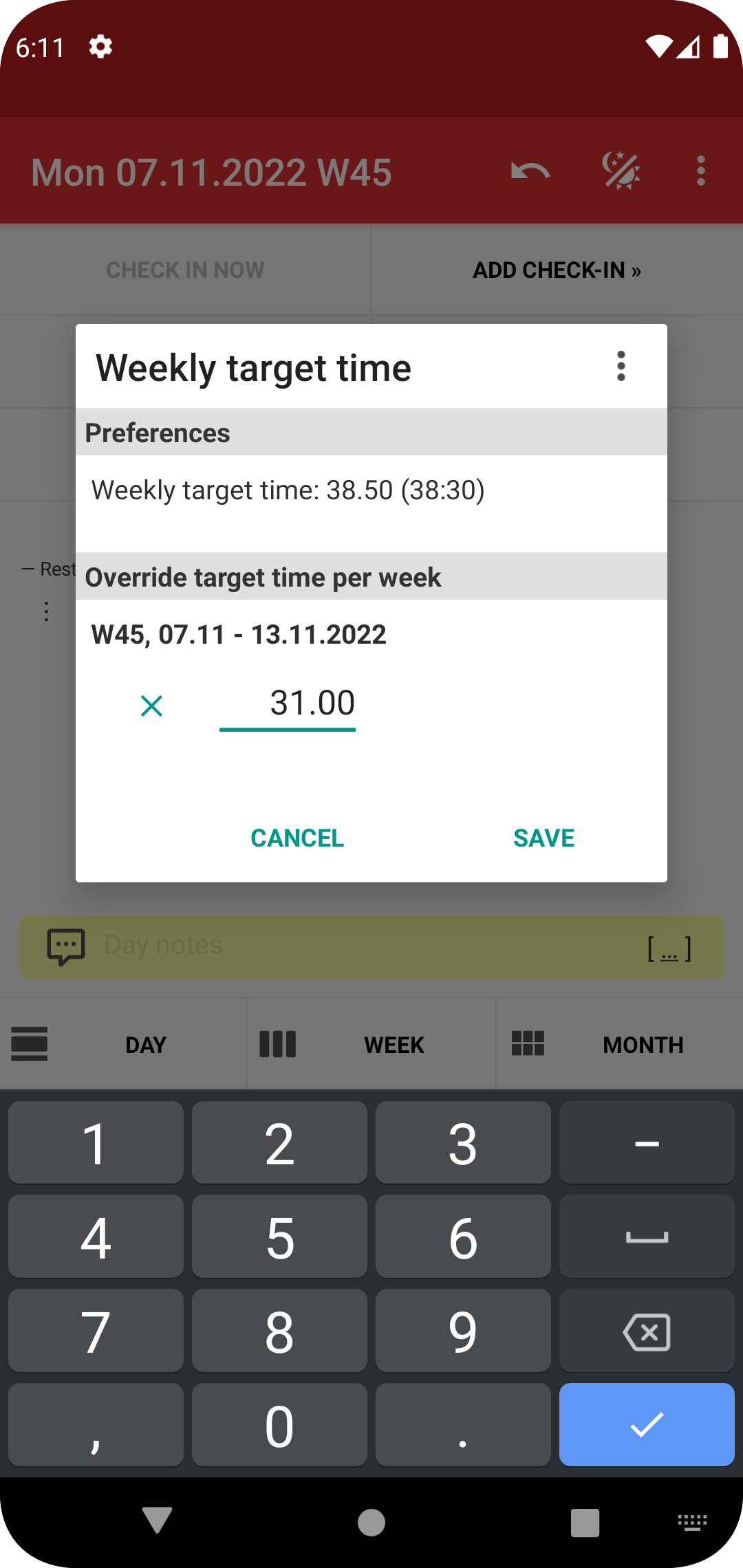
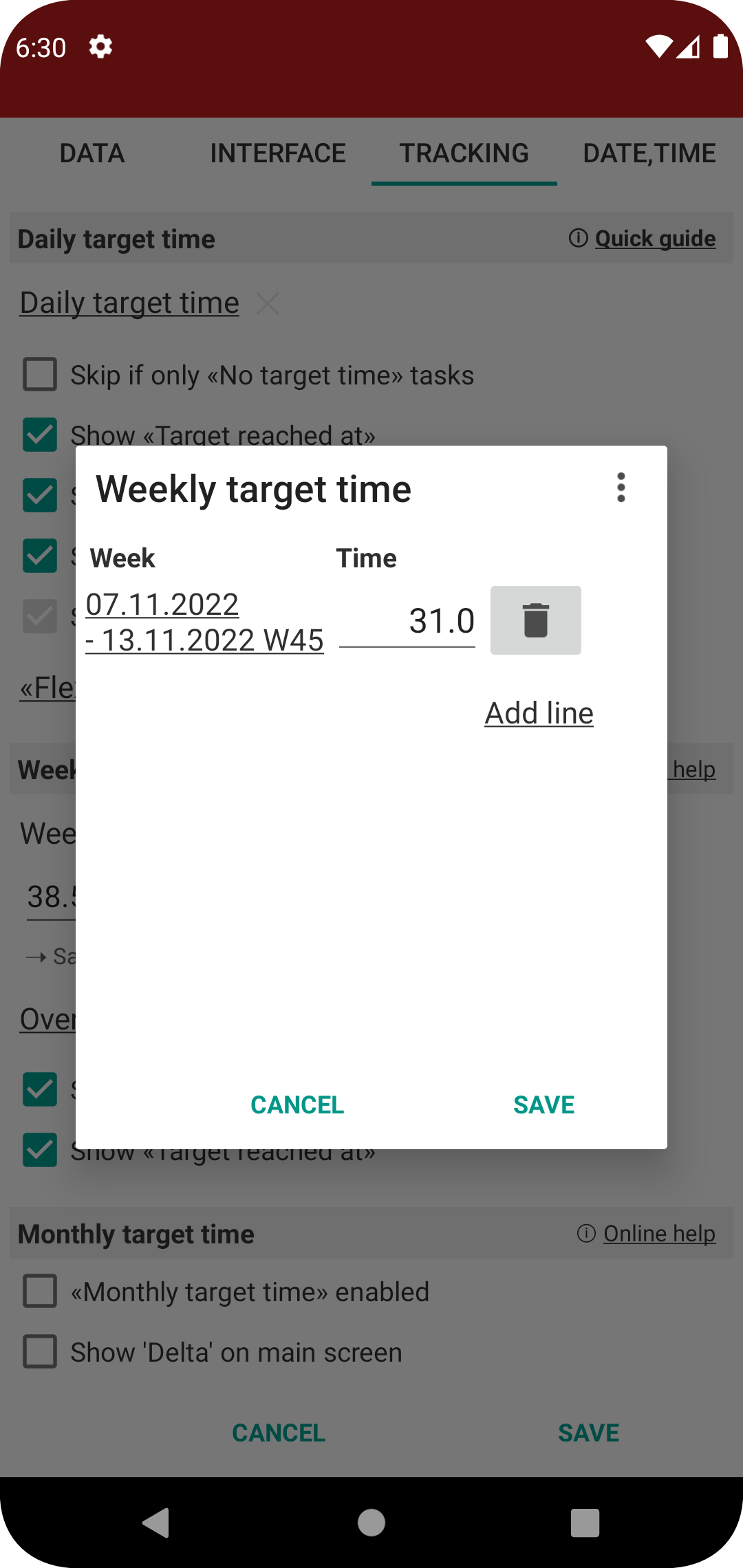
Override target hours for a single week
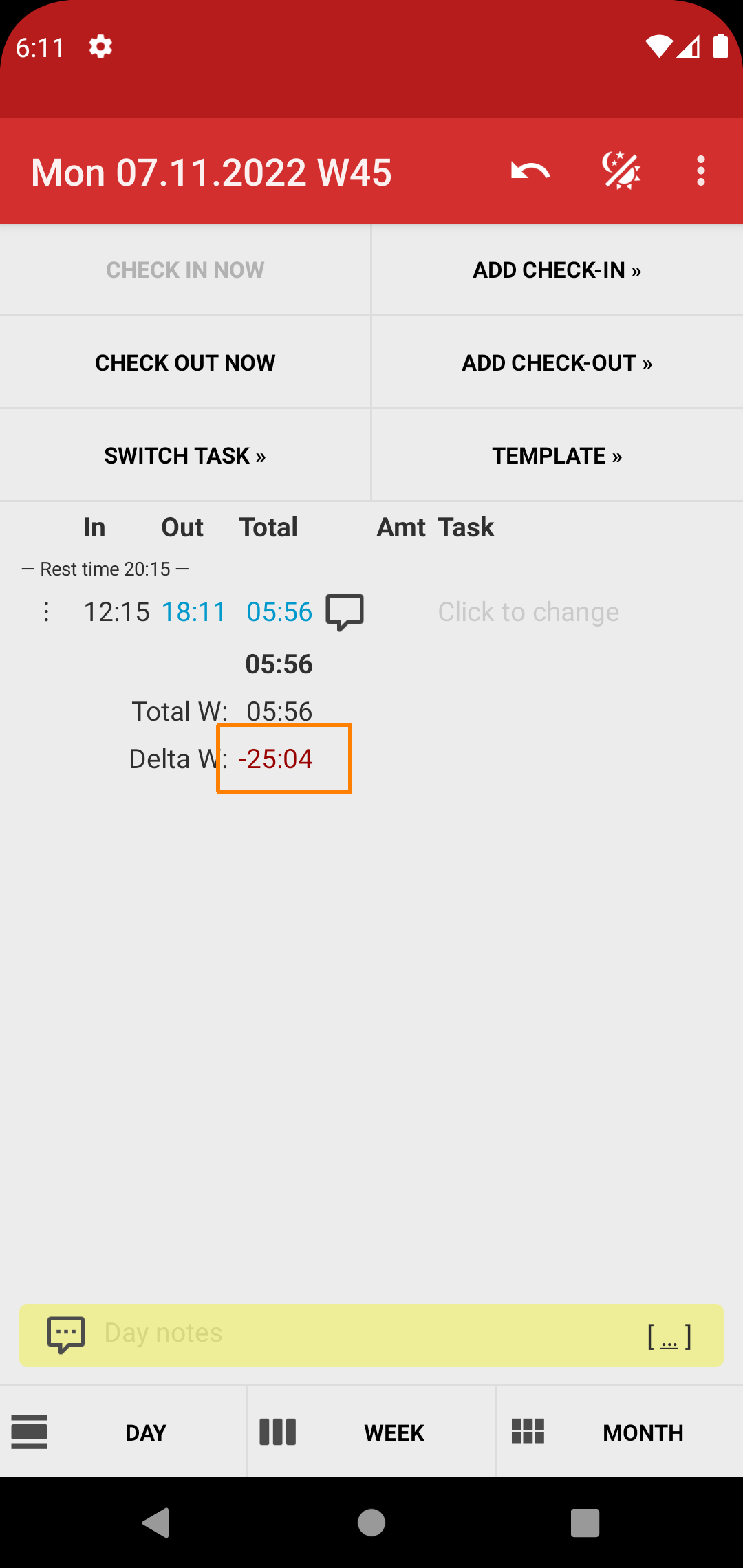
• In this sample: week W45 2022 has 31.00 target hours, instead of default 38.50
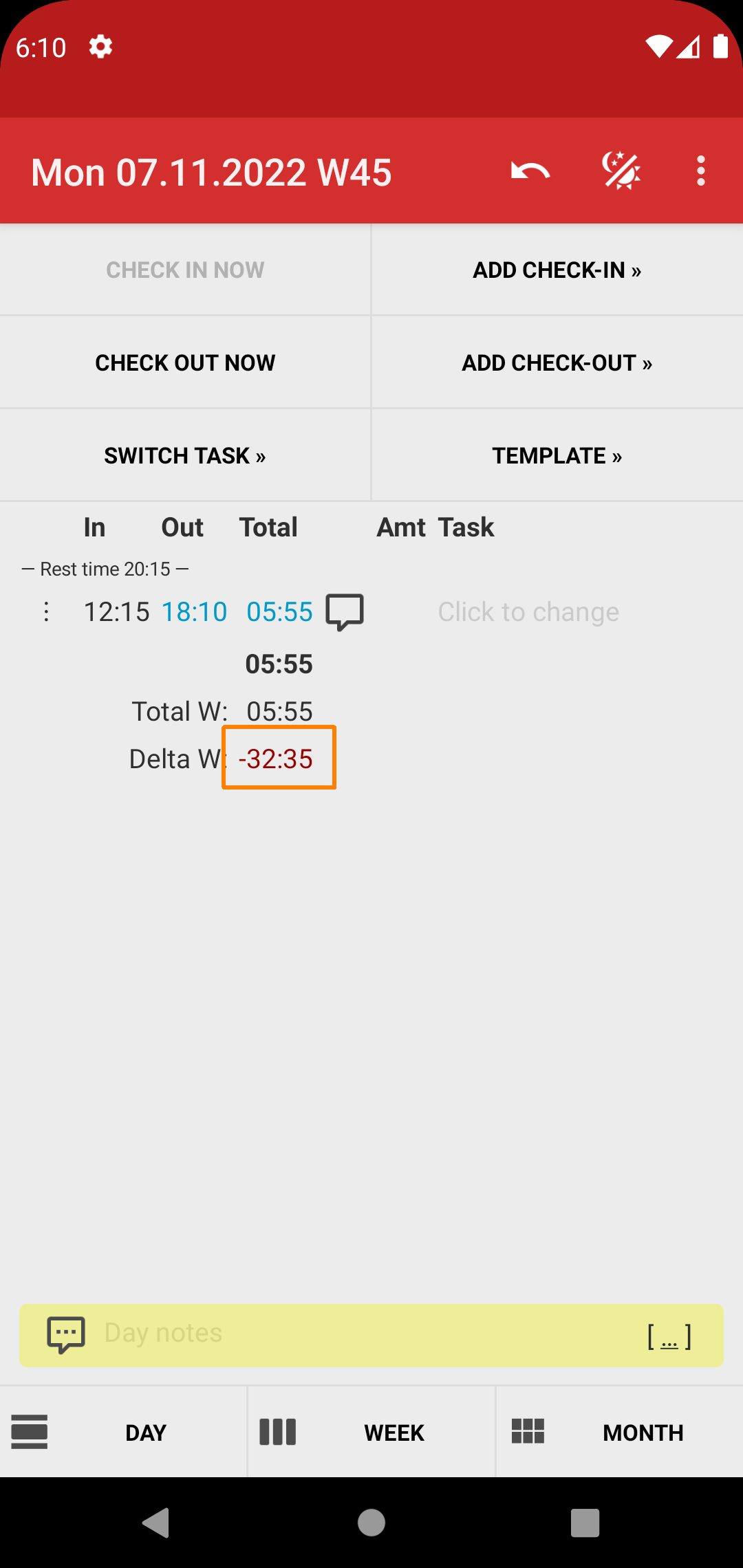
• Tap the “Delta W” value to open the editor.
View all weeks that have explicitly overwritten their target time
Keep historical values when your target hours change
→ See “Historical values”
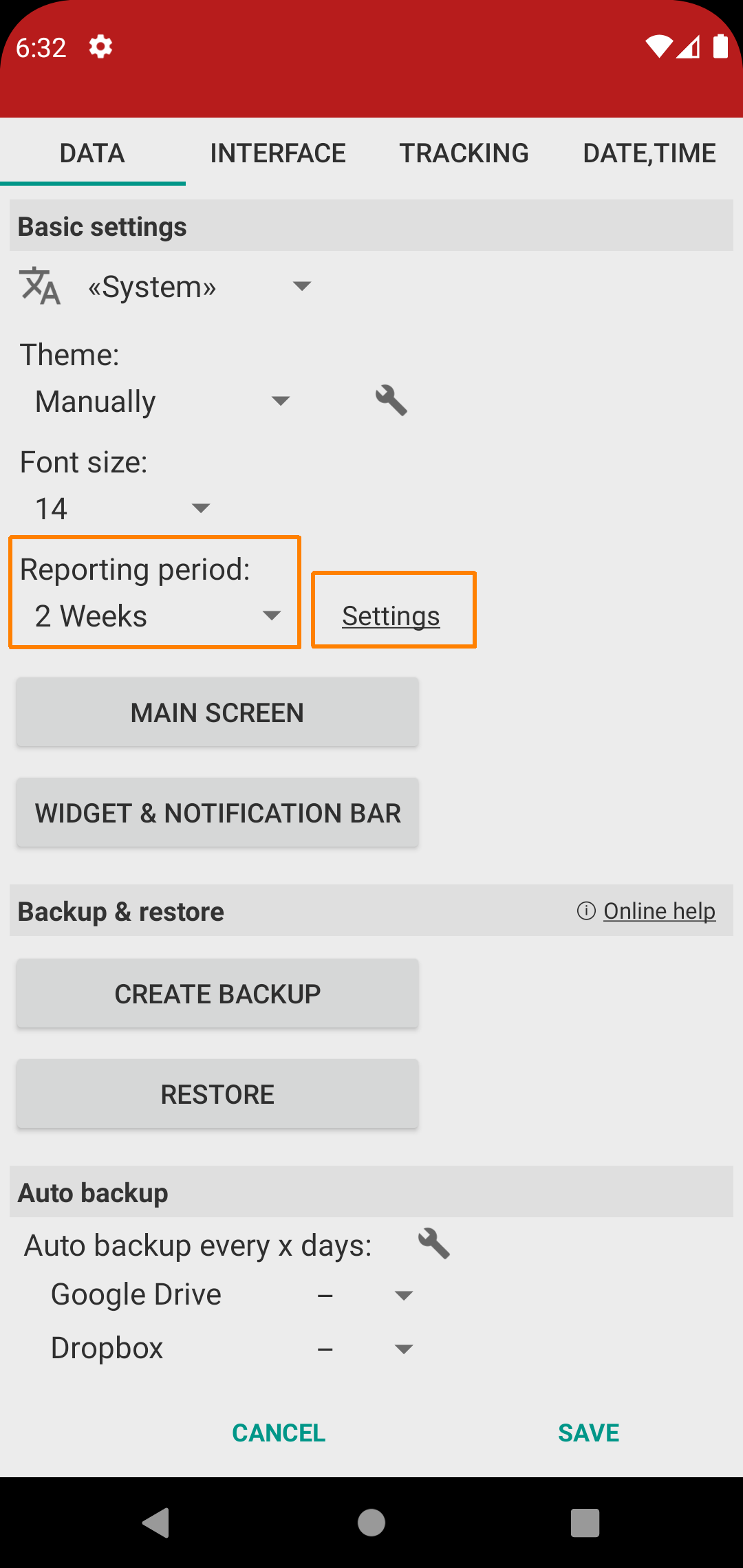
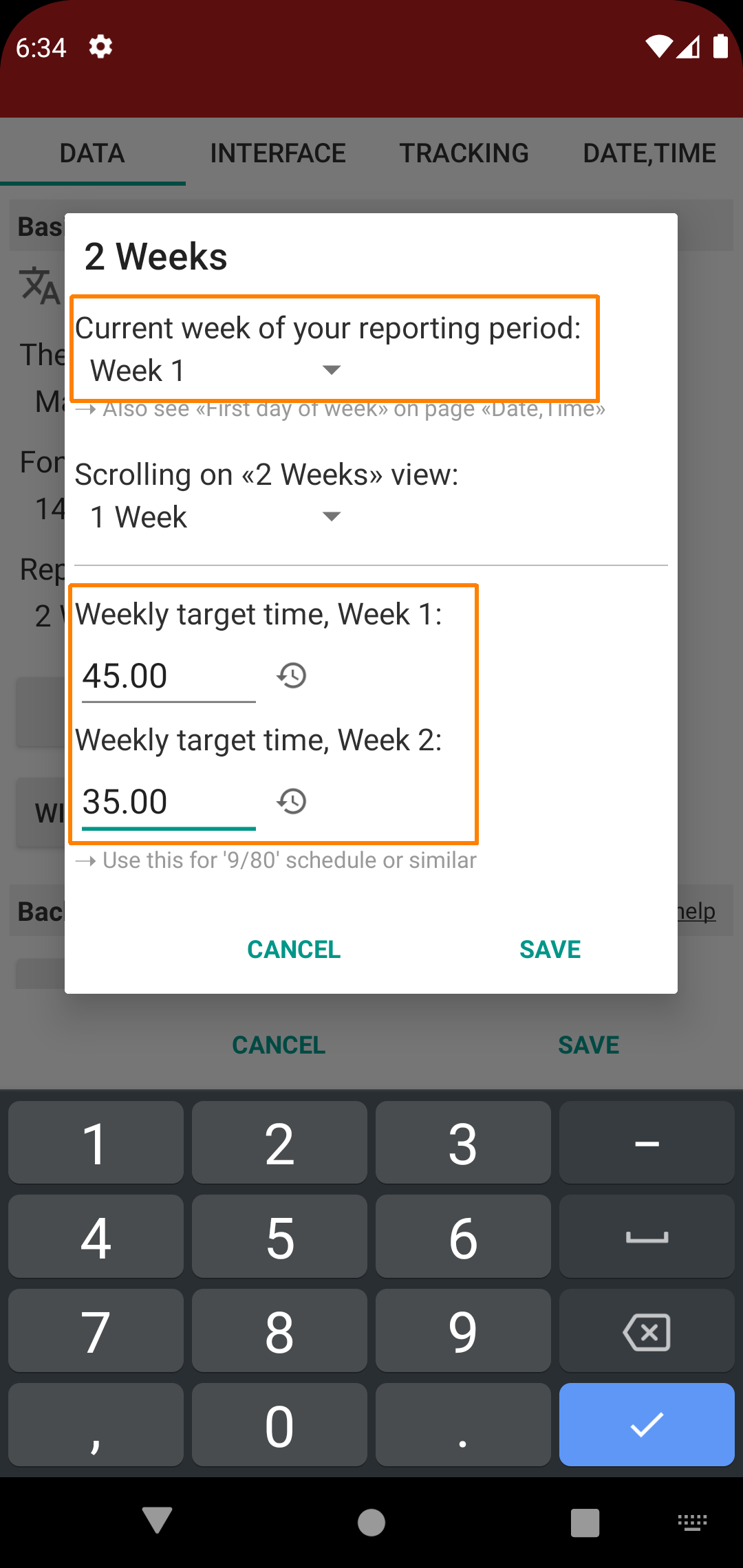
For advanced users: two weeks with alternating target hours, e.g. “9/80” model
More infos
What happens with 'empty' weeks?
Weeks without work unit entries are ignored in regards to “Delta” calculation.
If you want the app to count these weeks as “minus”, or track them otherwise, then you'll need to apply one of these workarounds:
(1) Use “Override target hours for a single week” mentioned above to increase the target hours of the previous week;
that is, you're essentially shifting the missing hours of the empty week to the previous week.
Typically this means doubling the default target hours for the previous week. Example: if your default hours is 35, then put in 70.
(2) Within the empty week, add a single work unit entry with length “0 hours 0 minutes”, for example “Monday 08:00 to 08:00”.
This makes the given week count as “minus default weekly target hours”, without changing your total worktime (as the time total of this dummy work unit is “zero”).
Drawback: the “Number of workdays” count shown on some reports is now inaccurate, as it includes this workday.
(3) Track all your missing time with a dedicated task, e.g. “Vacation” or “Sick leave”, as shown on the Holiday tracking page in section A2.